
XHSEM
Incoming Chip Inspection: Moisture Packaging, MSL Labels and Opening Records
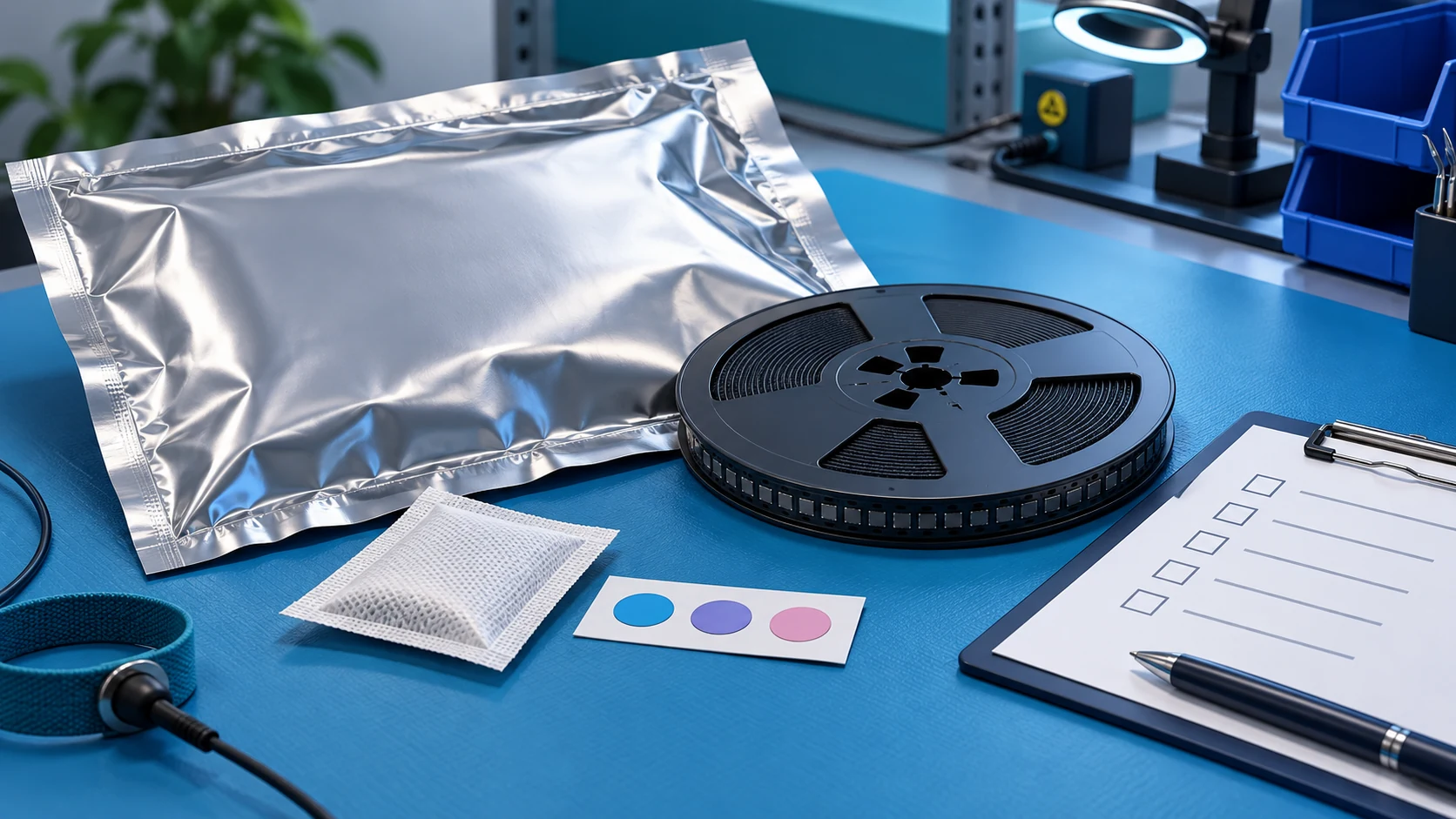
Incoming inspection often starts with part numbers and quantities, but packaging condition also affects production planning. Industrial, automotive-electronics and IoT projects that release material in batches should check moisture handling at receipt, rather than discovering missing opening records at assembly.
This is a purchasing and receiving guide. Exact handling conditions must follow the manufacturer documents, package labels and the organization's approved process.
1. Inspect the outer packaging before opening
Photograph the carton, bag seal and labels. Record receipt time, purchase order, full part number, quantity and lot details. Preserve punctured bags, damaged seals and signs of resealing for supplier review instead of quietly repacking them.
Do not open every sealed package simply to count the parts. Agree a sampling method with warehouse, quality and production teams. Start the opening record whenever a bag is opened. How tightly a bag fits a reel is not, by itself, evidence of acceptable moisture condition.
2. Match the MSL information to the exact package
Moisture Sensitivity Level information applies to the specified device and package. Storage and handling depend on material, moisture sensitivity, barrier packaging, desiccant and actual storage conditions. Use the instructions on the bag or carton and the manufacturer's current documentation. Production year alone does not determine whether material may enter assembly.
Check that the label is legible and corresponds to the complete orderable number and package. Record packing date, device lot and receipt date separately. Resolve missing information before release.
3. Keep an exposure record after opening
Record opening time, location, operator, bag or reel identity and the quantities released and returned. Where applicable, record exposure conditions and subsequent storage or resealing. The record needs to follow the material into the assembly process, including subcontracted work.
Review humidity-indicator information using the relevant instructions. Do not turn a single color observation into a universal acceptance rule. Missing history or abnormal indications should go to the quality or process team for disposition.
4. Do not apply a generic baking recipe
Baking conditions depend on the device, package, carrier and approved process. Trays, reels and other materials may have their own temperature limits. Purchasing personnel should not prescribe a temperature and duration from experience alone or treat baking as proof that an unknown history has been resolved.
5. Quarantine exceptions and keep evidence
Separate material with damaged packaging, conflicting labels or unclear exposure records. Keep photos, the purchase order and supplier correspondence together. Request clarification and let the authorized quality team decide whether to accept, test, recondition or reject the material.
A practical receiving record
- Purchase order, complete manufacturer part number, quantity and lot.
- Receipt date, packaging and seal condition, photographs.
- Package-specific moisture label and available manufacturer instructions.
- Opening, storage, transfer and resealing history where relevant.
- Exception owner, supplier response and approved disposition.
State moisture-packaging and inspection requirements when requesting a quote. This helps align delivery documentation and receiving expectations; it is not a substitute for the buyer's quality release process.
Send the full manufacturer part number, quantity, required delivery, packaging and inspection requirements. Stock, pricing and delivery are confirmed for each enquiry.
Request a Quote All procurement articlesSources and verification
English edition updated 26 October 2026. Technical information follows the source article dated 2026-10-21. Confirm current manufacturer documents and errata before design or procurement.