XHSEM
Industrial Gateway Chips: Interfaces, Power and Long-Term Supply Checks
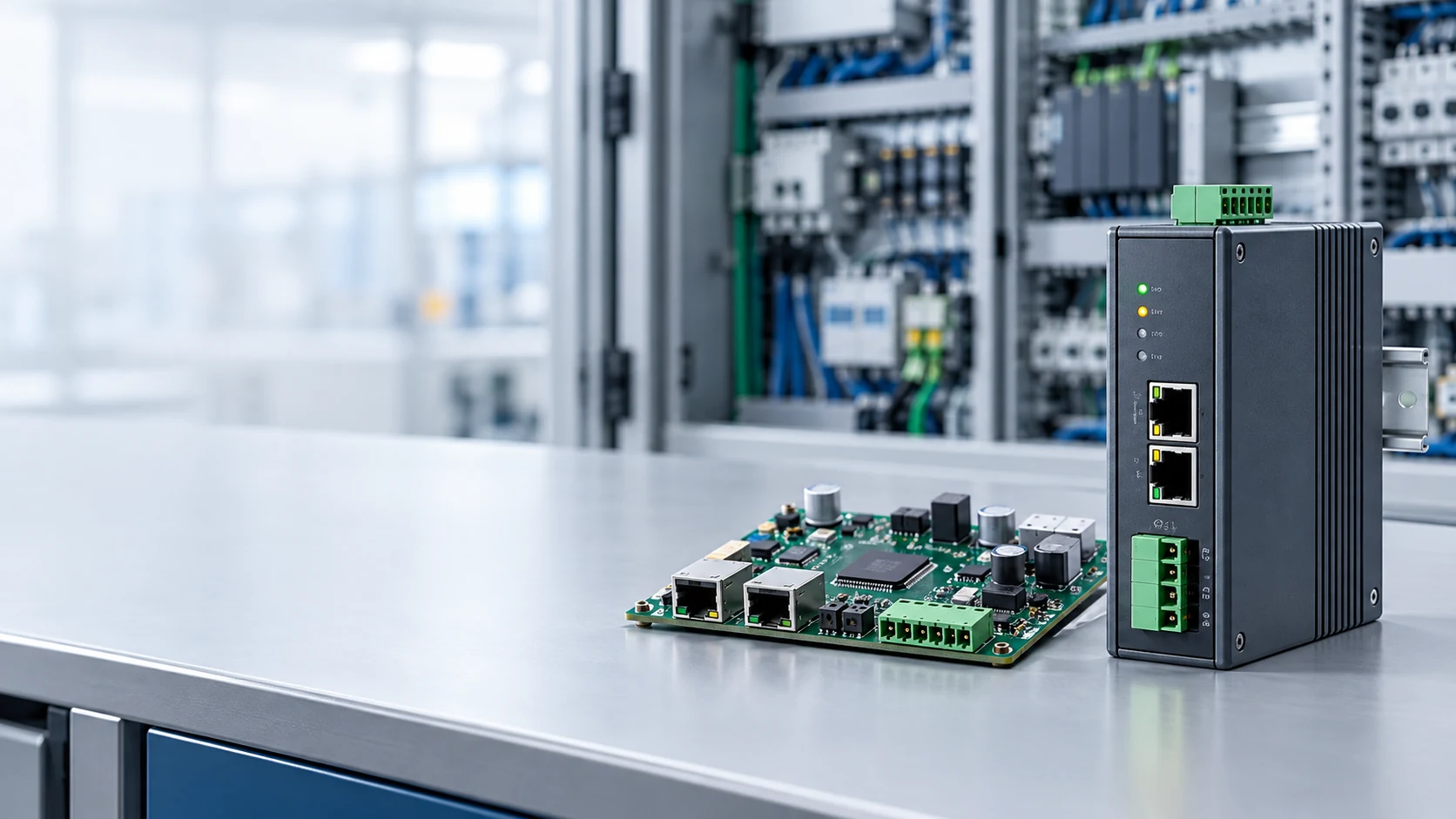
An industrial gateway connects field equipment to a wider network. Begin with the devices, data and operating environment, then choose the components. Clear system requirements help avoid purchasing attractive parts that do not fit the application.
1. Map where the data comes from and goes
List equipment-side and network-side interfaces, including RS-485, CAN, Ethernet and any wireless links. Specify port counts, protocols and processing requirements. A shared interface name does not mean an existing software stack can migrate unchanged.
Before purchasing the controller, engineering should confirm the supported operating system, BSP, drivers, protocol stacks and any licensing requirements. NXP's Real-Time Edge resources illustrate why software and industrial networking support need to be reviewed together.
2. Evaluate the controller with software and peripherals
Simple acquisition, protocol conversion and edge computing create different demands. Check peripheral resources, memory interfaces, boot modes, debugging and development documentation as well as compute performance. A higher clock frequency alone does not resolve every system constraint.
A development-board result is not automatically a finished-product result. Substitutions require checks of package, pins, electrical conditions, drivers and migration work. The MCU category provides a starting point for purchasing discussions, not a compatibility conclusion.
3. Consider signal isolation and isolated power together
Isolation requirements depend on grounding, potential differences, interference and the system's safety requirements. TI's RS-485 application guidance addresses both signal isolation and power for the isolated side. Compare the complete solution, including the isolated supply, protection and layout.
Reference designs help with evaluation; copying one is not a guarantee of passing system tests. Use the target device documentation and the project's test requirements for isolation and interface limits.
4. Include power, storage and clocks from the start
Specify input range, rail loads, start-up and power-loss behavior, temperature and thermal conditions. Review the regulator and external components together instead of filtering only by output voltage.
Storage must support program, logging and update requirements. Clock selection should match frequency, precision, load or output type requirements. Package appearance is not sufficient evidence of electrical interchangeability.
5. Verify longevity for the exact device and date
Industrial projects should review lifecycle status and change or discontinuance notices. A manufacturer's longevity program does not cover every device equally and is not a promise of current inventory or a fixed lead time. Check the exact covered part, applicable terms and dates.
Before requesting a quotation
- Equipment and network interfaces, quantities, protocols and isolation.
- Controller part, operating system, drivers and development resources.
- Power, temperature, cooling and required system tests.
- Full suffixes, quantities, delivery milestones, packaging and lifecycle checks.
Separate confirmed requirements from open engineering questions. Send the resulting BOM for a purchasing discussion; stock, pricing and delivery remain subject to confirmation.
Send the full manufacturer part number, quantity, required delivery, packaging and inspection requirements. Stock, pricing and delivery are confirmed for each enquiry.
Request a Quote All procurement articlesSources and verification
English edition updated 26 October 2026. Technical information follows the source article dated 2026-10-18. Confirm current manufacturer documents and errata before design or procurement.